
Urgent? Call Lachie now
House flooded? Don't turn the power back on until it's been checked
Water and silt in power points, wiring or the switchboard can cause shocks and fires when the power comes back. Keep it off until Lachie has tested it.
5.0 from 24 Google reviewsUpfront pricesLicensed & insured
Offers on this job
- $0Call-out feeOn booked jobs, Monday to Friday, 7am to 5pm.
- $139Home safety inspectionSwitchboard, safety switches, smoke alarms and wiring, all checked.
- $200 offSwitchboard upgradeOld fuses or no safety switches? Save on a new switchboard.
- $60 offYour first jobNew customers save on their first booked job.
The $0 call-out is for booked jobs: a time we have set together, with the work going ahead. It applies Monday to Friday, 7am to 5pm. After-hours emergency call-outs have a minimum charge of $349 + GST, and Lachie confirms it on the phone before he drives out.
What floodwater does to your wiring
Anything that sat under water, from power points to the meter box, can hold silt and damp long after the water goes. It all needs testing before the power goes back on.
- Power points under water
- A wet meter box or switchboard
- Cables in the walls and under the floor
- Appliances that sat in water
- The water line
Power points under water
Low power points fill with water and fine mud. Even once dry, the silt can carry current. Ones that went under are usually replaced, not cleaned.
A wet meter box or switchboard
Water across the board can short and damage safety switches and breakers. If the meter or service fuse got wet, that's Ausgrid or Level 2 work.
Cables in the walls and under the floor
Water gets in at joints and cable ends. Some cables test fine once dry, others don't, which can mean rewiring the flooded part of the house.
Appliances that sat in water
Fridges, washing machines and heaters that went under can leak power or short out. Don't plug them back in until they've been checked.
The water line
Damp left in the walls corrodes connections over the following weeks. A circuit that works on day one can start tripping or overheating a month later.
What floodwater does to your electrics: more detail on each cause
Water isn't the only problem. It's the mud, salt and damp it leaves behind.
Silt and water inside fittings Most common
Power points, switches and junction boxes fill with water and fine mud. Even once dry, the silt can carry current and cause faults. Fittings that have been under water are usually replaced, not cleaned.
A wet switchboard Serious
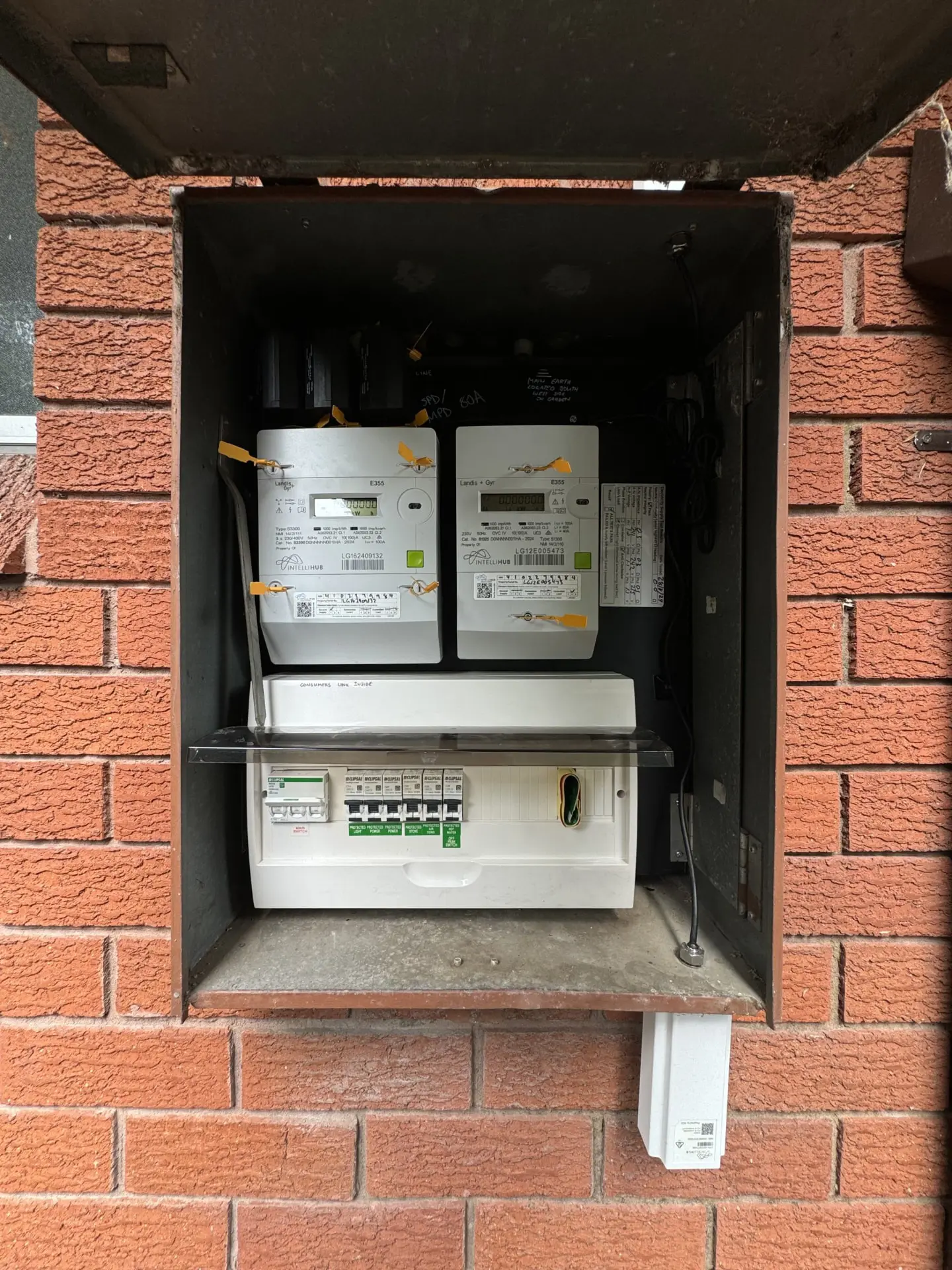
Water across a switchboard can short between parts, damage safety switches and breakers, and leave corrosion behind. A board that sat in floodwater usually needs replacing. If the meter or service fuse got wet, that's Ausgrid or Level 2 accredited service provider work.
Damaged cables and joints
Cables in walls and under floors can take in water at their joints and ends. Some test fine once dry. Others don't, which can mean rewiring the flooded part of the house.
Corrosion that shows up later Weeks later
Damp left in walls and floors corrodes terminals over the following weeks. A circuit that works on day one can start tripping or overheating a month later.
Storm water getting in No flood needed
Even without a flood, storms drive water into outdoor fittings, meter boxes and roof spaces. That's why the power can keep going off during a storm.
Signs your electrics have been affected
If water reached any of these, the power stays off until it's tested. Mud lines on the walls show how high it got.
Water reached the power points
Most power points sit low on the wall, so even shallow floodwater can cover them. Water and silt stay inside after the flood goes down.
The switchboard or meter box got wet
Floodwater, wind-driven rain or water running down the wall can reach the board. Mud, rust or a tide mark inside the door means it was wet.
The power went off as the water came in
Safety switches or the main switch tripping as water rose means the protection did its job. It also means there's a fault waiting when it's switched back on.
Power keeps going off during the storm
Trips that come and go in heavy rain mean water is reaching wiring or fittings somewhere. It's a warning, even if the house didn't flood.
Appliances sat in water
Fridges, washers, dryers, ovens and hot water systems have motors and controls low down. Once they've been under water, they need checking before use.
Wet walls and a damp underfloor
Wiring runs inside walls and under the floor. Water that soaked into the cavities can reach cable joints you can't see.
How we check it and get the power back on
We work through the house in order, from where the power comes in to the last power point. Nothing goes back on until it tests right.
- 1
Make it safe
Lachie checks the supply is off, isolates the switchboard and tags it, so nobody switches a flooded circuit back on by mistake.
- 2
Inspect the switchboard and meter box
We look for water, silt, rust and heat damage, then test the main switch, safety switches and breakers. Anything that sat in water is marked for replacement.
- 3
Test every circuit
Each circuit is tested with an insulation resistance tester, and power points and switches below the flood line are opened and checked. The test shows which cables are sound, without pulling every wall apart.
- 4
Replace, retest and switch back on
We replace wet power points, switches and damaged parts, rewire where cables failed, and replace the board if it needs it. Each circuit goes back on only after it passes. You get a Certificate of Compliance for Electrical Work (CCEW) where the work needs one.
- 5
A written summary
You get a written summary of what was flooded, what we tested, what failed and what we replaced.
Replace fittings, rewire or a new switchboard: your options side by side
It depends on how high the water got and how long it stayed. We test first, so you only replace what failed. You get the price before any work starts.
Ausgrid says flood-damaged homes need to be checked by a qualified electrical professional before the power is switched back on. If Ausgrid disconnected your supply, talk to them on 13 13 88 about reconnecting it, and any work on the meter or service fuse is Ausgrid or Level 2 work. We do the check, tell you what's needed and help you through it.
What you can safely do now
Your safety comes first, then the house. Don't go near anything electrical while there's water around it.
Safe to do now
- If water is still rising, leave early. Call the NSW SES on 132 500 for flood and storm help, or 000 if your life is in danger.
- Before water reaches the switchboard, switch off the main switch, but only if the board is dry and you can reach it without standing in water.
- If the water has reached the board, or you'd have to walk through water, leave it. Stay out and call.
- Unplug appliances only if they're dry, you're dry and you're not standing in water.
- Take photos of the water level, the switchboard and damaged appliances, for us and your insurer.
- Keep kids and pets out of flooded rooms.
Don't
- Don't turn the power back on, or let anyone else, until the house has been checked.
- Don't touch the switchboard, power points or appliances while they're wet or you're standing in water.
- Don't use appliances that were under water, even if they seem to work.
- Don't connect a generator to your house wiring or a power point. It can feed power back into the street lines.
Call straight away if
- Power lines are down or damaged nearby. Stay well back and call Ausgrid on 13 13 88.
- You feel a tingle or shock from a tap or the shower. Keep everyone away and call Ausgrid on 13 13 88, then us.
- You smell burning or see smoke from the board or a power point. Get out and call 000. Never put water on an electrical fire.
- The water has gone down and you need the power back on safely.
Questions people ask
Can I turn the power back on after a flood?
Not until a licensed electrician has checked it. Water and silt left in power points, the switchboard and cables can cause shocks or fires when power returns. We test each circuit and turn the safe ones back on first.
How long does the power have to stay off after a flood?
Until the house is tested and anything that failed is fixed. Dry areas can often go back on sooner, circuit by circuit. Some cables need to dry out and be tested again. We tell you what's on, what's off and why.
Do flooded power points need replacing?
Usually, yes. Water carries silt and salt inside, and the contacts and terminals corrode even after they look dry. Replacing them is quick, and much safer than hoping they've dried out.
Why does my power keep going off during a storm?
Water is getting into something electrical: an outdoor light or power point, the meter box, or a fitting under a roof leak. The safety switch trips to protect you. Reset it once. If it trips again, leave it off and call us.
Will insurance cover flood damage to the electrics?
It depends on your policy, as flood cover varies, so ask your insurer early. We give you a written summary of what we found and what we replaced.
Can you come straight away?
For urgent make-safe work, yes. Lachie takes urgent calls from 4am to 9:30pm, 7 days. After big floods many homes need checking at once, so call 0402 079 953 early and keep the power off while you wait.

Get a free quote from Lachie
Four quick details and Lachie will be in touch. Your quote is back within 24 hours, with no hidden fees.
- Free quotes. Back to you within 24 hours, in plain English, with no hidden fees.
- Upfront pricing. You know the cost before any work starts.
- 100% satisfaction guarantee. Not happy with the work? Lachie comes back and makes it right, free.
- Quality guarantee. Every job done to the Australian wiring rules (AS/NZS 3000), with parts that meet Australian standards, and tested before we leave.
Rather talk it through? Call Lachie on 0402 079 953