
Urgent? Call Lachie now
Power keeps going off and on by itself? Get it checked now, it can be a dangerous supply fault
Power cutting in and out with nothing tripping often means a failing connection in your supply or switchboard. It can damage appliances and cause shocks, so get it checked now.
5.0 from 24 Google reviewsUpfront pricesLicensed & insured
Offers on this job
- $0Call-out feeOn booked jobs, Monday to Friday, 7am to 5pm.
- $200 offSwitchboard upgradeOld fuses or no safety switches? Save on a new switchboard.
- $60 offYour first jobNew customers save on their first booked job.
The $0 call-out is for booked jobs: a time we have set together, with the work going ahead. It applies Monday to Friday, 7am to 5pm. After-hours emergency call-outs have a minimum charge of $349 + GST, and Lachie confirms it on the phone before he drives out.
Where power cutting in and out comes from
When everything drops out and comes back, the cause is usually a connection between Ausgrid's pole and your main switch, or a fault in the street.
- The street network (Ausgrid's)
- The service line and neutral
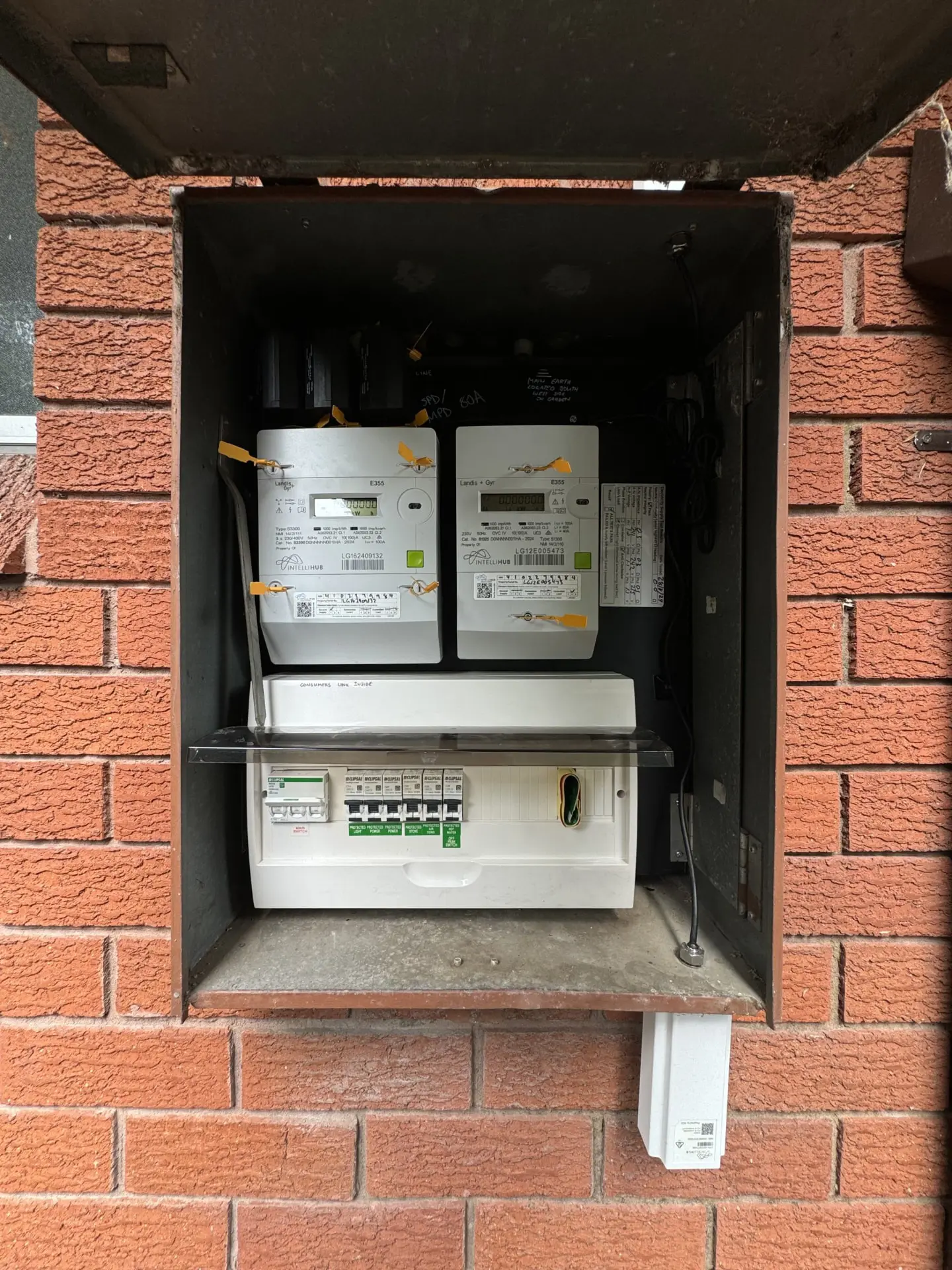
- The service fuse and meter connections
- The main switch
- The safety switches
The street network (Ausgrid's)
Blinks across the street, especially in storms, are network faults. Protection can try to restore power a few times before it stays off. Ausgrid fixes these: 13 13 88.
The service line and neutral
A worn connection at the bracket on your house, or a branch rubbing the line, drops the power in wind. A failing neutral makes lights flare and dim. Call 13 13 88.
The service fuse and meter connections
A loose or corroded connection at the service fuse or meter arcs and drops power in and out, and gets hot doing it. That's Ausgrid or Level 2 work.
The main switch
An old main switch, or a loose main cable terminal, makes and breaks contact as it heats and cools. Heat marks or a burning smell: keep clear and call.
The safety switches
A switch that trips and stays off until you reset it is tripping, not power cutting in and out. If it trips again, there's a fault behind it. Reset it once only.
What usually causes it: more detail on each cause
When power cuts in and out with nothing tripping, the fault is usually in a connection that carries the whole house: in the street, the supply or the main switch.
A loose or failing supply connection Most common
The connections at the service fuse, the meter, the main switch and where the service line joins your house carry everything. When one loosens or corrodes, it arcs and drops the power in and out, and gets hot doing it.
A failing main neutral Dangerous
The neutral carries current back to the network. When its connection fails, voltage swings, lights flare and dim, appliances get damaged and metal taps can give a tingle. Ausgrid needs to know straight away: 13 13 88.
A network fault in the street
Trees brushing lines, storm damage and equipment faults cause blinks and short drops. Network protection can try to restore power a few times before it stays off. Ausgrid fixes these.
A worn main switch or loose board connection Older boards
An old main switch, or a loose terminal on the main cables in your switchboard, can make and break contact as it heats and cools. Heat marks or a burning smell at the board are the signs.
Wind moving the service line Overhead supply
Where power comes in on an overhead line, a worn connection at the bracket on your house, or a branch rubbing the line, can drop the supply in the wind.
A big appliance dragging the voltage down Less urgent
If lights only dip when the air con or pool pump starts, a connection may be getting tired. It still needs checking, but it's less urgent.
What you might be seeing
Note what happens, when, and whether the neighbours notice it too. That tells us whether it's the street, your supply or your board.
Everything cuts out for a second, then comes back
Short drops across the whole house, with nothing tripped, point to a loose connection in the supply or main switch, or a fault on the street network.
Lights go bright, then dim
Lights that flare brighter than normal and then fade, often as big appliances switch on, are a classic sign of a failing neutral. Call Ausgrid on 13 13 88.
Appliances acting strangely or dying
Motors labouring, chargers and TVs failing, or electronics resetting themselves can all come from voltage swinging high and low.
A tingle from a tap, the shower or an appliance
That's an emergency. Keep everyone clear, don't touch it again and call Ausgrid on 13 13 88 now.
It's worse in wind or rain
Wind can move a worn connection on the overhead service line. Rain can get into the meter box.
The neighbours are getting it too
If the street has the same drops, it's likely a network fault. Report it to Ausgrid on 13 13 88.
How we find it and make it safe
We test the supply first, because this can be dangerous. Then we fix what's ours, and get Ausgrid or a Level 2 electrician onto the rest.
- 1
Make sure it's safe
On the phone, Lachie asks about tingles, flaring lights and smells. If it sounds like a failed neutral, he'll have you call Ausgrid on 13 13 88 first and tell you what to switch off.
- 2
Test the supply at the meter box
He measures the incoming voltage, neutral included, and watches it under load. A failing connection shows up as voltage that swings or drops.
- 3
Check every main connection
With the power safely isolated, he checks the main switch, the main cables, and the neutral and earth connections in the board for heat, looseness and corrosion.
- 4
Repair, report and protect
We repair the connections on your side of the meter. If the fault is in the service fuse, the service line or the network, we report it and work with Ausgrid or a Level 2 provider. You get a Certificate of Compliance for Electrical Work (CCEW) where the work needs one.
Repair the board, fix the supply connection, or add surge protection: your options side by side
The first job is finding and fixing the failing connection. Surge protection is worth considering once the supply is sound.
If your board is old and heat-damaged, Lachie may suggest an upgrade. It's never a condition of fixing the fault. You get the price before any work starts.
What you can safely do now
Treat this as urgent. People come before appliances.
Safe to do now
- If anyone feels a tingle from a tap, the shower or an appliance, keep everyone clear of it and call Ausgrid on 13 13 88 now.
- If lights are flaring and dimming and no one has felt a tingle, switch off at the main switch, but only if the board is dry and safe to reach.
- Unplug TVs, computers and chargers, if they're dry and safe to touch, to protect them from voltage swings.
- Ask a neighbour if they're seeing it too. If they are, report it to Ausgrid on 13 13 88.
- Note when it happens and what was running, and take a photo of the switchboard.
- Keep kids and pets away from the meter box.
Don't
- Don't touch taps, the meter box or metal appliances if anyone has felt a tingle.
- Don't keep using the power to see if it settles down. A failing connection gets worse, and hotter.
- Don't open the meter box or switchboard covers, or touch the service line or its bracket on the house.
- Don't go near a sagging or fallen line. Stay well back and call Ausgrid on 13 13 88.
Call straight away if
- Lights flare bright and dim, or appliances are dying. Call Ausgrid on 13 13 88, then us.
- You smell burning or see scorching or sparks at the meter box, the switchboard or where the line meets the house. If there's smoke or fire, call 000 and never put water on it.
- The power keeps dropping out and you have medical equipment, a full freezer or tenants relying on it.
- It started after a storm, a branch hitting the line, or work on the house.
Questions people ask
Why does my power keep going off and on without tripping the breaker?
Breakers trip on overloads and shorts, not on a loose connection. Power that drops in and out with nothing tripped usually means a connection in the supply, main switch or neutral is failing, or there is a network fault. It needs checking now.
What causes power surges in a house?
Real surges come from lightning and switching on the network. More often, what people notice is voltage swinging high and low from a failing neutral or loose supply connection. Lights flaring and dimming is the giveaway. Call Ausgrid on 13 13 88.
Is it dangerous if the power keeps flickering on and off?
It can be. A failing supply connection can overheat and damage appliances, and if it's the neutral, metal taps or appliances can give a shock. Treat it as urgent, especially if lights flare or anyone feels a tingle.
Who fixes it, Ausgrid or an electrician?
Ausgrid fixes the street network, and you call them for tingles and flaring lights. A licensed electrician fixes your switchboard and wiring. The service fuse, service line connection and meter are Ausgrid or Level 2 work. We tell you which before anything is done.
Will surge protection stop it happening?
No. A surge protector helps protect appliances from spikes, but it won't fix a loose connection or a failed neutral. We fix the fault first. Then you can decide whether surge protection is worth adding.
Can you come now?
Yes. Lachie takes urgent calls from 4am to 9:30pm, 7 days. If anyone has felt a tingle, call Ausgrid on 13 13 88 first, then call 0402 079 953. You get the price before any work starts.

Get a free quote from Lachie
Four quick details and Lachie will be in touch. Your quote is back within 24 hours, with no hidden fees.
- Free quotes. Back to you within 24 hours, in plain English, with no hidden fees.
- Upfront pricing. You know the cost before any work starts.
- 100% satisfaction guarantee. Not happy with the work? Lachie comes back and makes it right, free.
- Quality guarantee. Every job done to the Australian wiring rules (AS/NZS 3000), with parts that meet Australian standards, and tested before we leave.
Rather talk it through? Call Lachie on 0402 079 953