
Often fixed the same day
EV charger or solar tripping your power? We'll check your switchboard can handle it
Usually the circuit, safety switch or switchboard isn't suited to the load, or there's a fault in the charger or solar wiring. Lachie tests each and tells you straight.
5.0 from 24 Google reviewsUpfront pricesLicensed & insured
Offers on this job
- $0Call-out feeOn booked jobs, Monday to Friday, 7am to 5pm.
- $200 offSwitchboard upgradeOld fuses or no safety switches? Save on a new switchboard.
- $60 offYour first jobNew customers save on their first booked job.
The $0 call-out is for booked jobs: a time we have set together, with the work going ahead. It applies Monday to Friday, 7am to 5pm. After-hours emergency call-outs have a minimum charge of $349 + GST, and Lachie confirms it on the phone before he drives out.
Where solar and EV charging trip the power
Solar and an EV charger both carry heavy current for hours, and both come back to your switchboard. Each needs the right circuit and the right safety switch.
- The solar panels and roof wiring
- The inverter and its circuit
- The safety switch type
- The charger's own circuit
- The main switch and supply
The solar panels and roof wiring
Water in a rooftop isolator or sun-damaged cable leaks to earth, and the inverter shows a fault code. That side is usually for your solar installer.
The inverter and its circuit
The 'Main switch inverter supply' carries the solar output. On sunny afternoons a loose connection or undersized breaker heats up and trips.
The safety switch type
EV chargers and some inverters can leak a small amount of DC current that some older safety switches aren't built for. The maker's instructions say what's needed.
The charger's own circuit
A wall charger needs its own circuit sized to its rating. On a small or shared circuit, or with a loose terminal, it trips partway through charging.
The main switch and supply
Charging while the air con, oven and hot water run can ask for more than the main switch or supply allows. Load management slows charging when the house is busy.
What usually causes it: more detail on each cause
Chargers and solar are big, long-running loads. Most trips come down to the circuit or board not being set up for them.
A circuit or breaker too small for the load Most common
A wall charger needs its own circuit, sized to its rating, and so does a solar inverter. When a charger goes on a small existing circuit, or an inverter is upgraded without changing its breaker, it trips under load.
The wrong type of safety switch
EV chargers and some inverters can leak a small amount of DC current, which some older safety switches aren't built to handle. The maker's instructions say what protection is needed, and some need a different type of safety switch.
A loose or hot connection
Hours of heavy current heat every terminal. A loose one at the breaker, an isolator or the charger runs hotter, and can scorch before anything trips.
Too much load for the main switch or supply Main switch trips
Charging while the air con, oven and hot water run can ask for more than the main switch or supply allows. Load management slows charging when the house is busy.
A fault on the solar panel side Solar
Water in a rooftop isolator, cable damaged by sun or rodents, or a failing panel can leak to earth. That side of the system is usually best handled by your solar installer, or the manufacturer under warranty.
An old switchboard Older boards
Ceramic fuses, one safety switch for everything, or no spare room make it hard to add a charger or solar properly.
What trips, and when, tells us the cause
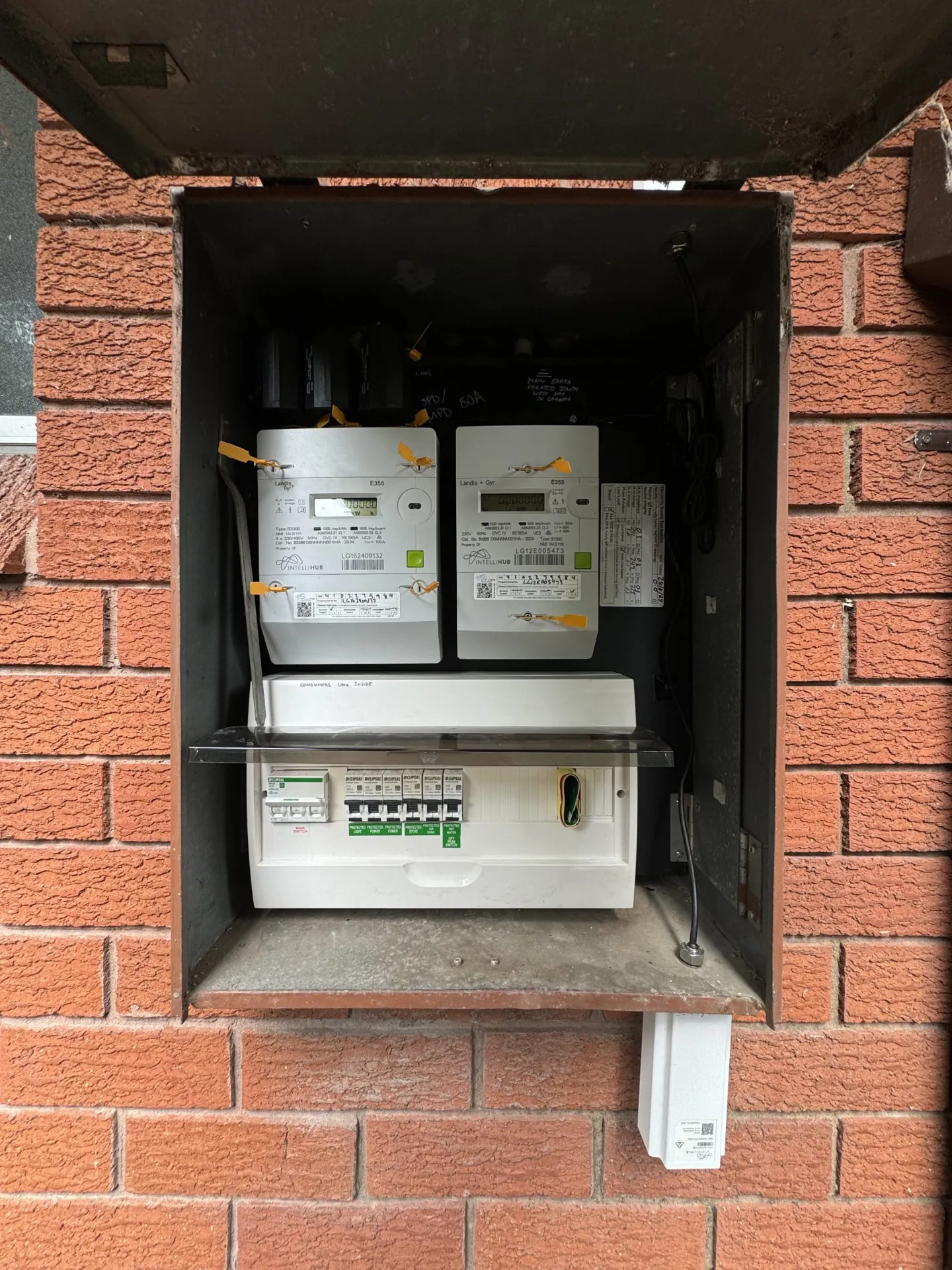
EV chargers and solar both work a switchboard hard. Note which switch went and what was happening.
The charger breaker trips partway through charging
Charging draws heavy current for hours. A circuit too small, a connection heating up, or a breaker in a hot meter box can trip partway through.
The main switch trips while the car charges
If the house goes off when the car charges with the oven or air con on, it's asking for more than the main switch or supply can carry.
A portable charger trips a power point circuit
The charger that comes with many EVs plugs into a power point, but draws close to that power point's limit for hours. On a shared circuit, the breaker trips or the power point overheats.
The solar main switch trips on sunny afternoons
The switch labelled 'Main switch inverter supply' carries the solar's output. At full output on a hot day, a loose connection or an undersized breaker can heat up and trip.
The inverter shows an earth or isolation fault
That usually points to the panel side: water in a rooftop isolator or damaged cable on the roof. Note the fault code on the screen.
How we fix it
We check what's connected, what it needs and what your board can carry, then fix what doesn't match.
- 1
Talk it through on the phone
Lachie asks which switch trips, when, and what was running. A photo of your switchboard, the charger or inverter's label and any fault code helps him plan.
- 2
Check the circuit and protection
He checks the breaker, cable and safety switch type against the charger or inverter maker's instructions, tests the cable, and checks each terminal for heat damage.
- 3
Measure the load
With the car charging and the house running, he measures what the house draws. That shows whether you need load management, a bigger circuit, or a board with more room.
- 4
Fix it and sign it off
You get a written summary and the price before any work starts. That might be a dedicated circuit, the right safety switch, remade connections or work on the switchboard. If the fault is in the charger, the inverter or the panels, we say so and point you to the installer or manufacturer. You get a Certificate of Compliance for Electrical Work (CCEW) where the work needs one.
Fix the circuit, add load management, or upgrade the board: your options side by side
What you need depends on whether it's one circuit tripping or the whole house running out of room.
Solar panels make power whenever light hits them, even with the main switch off, so the rooftop wiring and the inverter are never a DIY job.
What you can safely do now
These are safe for anyone. Inside the switchboard, the charger, the inverter and anything on the roof is a licensed electrician's job.
Safe to do now
- Stop charging from the car's app or the charger's controls.
- If the main switch tripped, turn off the oven, air con and heaters, then reset it once. If it trips again, leave it off.
- Reset a tripped charger or solar breaker once. If it trips again, leave it off.
- Photograph any fault code on the inverter or charger screen, and the switchboard.
- Keep kids and pets away from the charger cable and the inverter.
Don't
- Don't open the inverter, the charger or any isolator, or go on the roof to check the panels.
- Don't charge the car from a power board or extension lead to get around a trip.
- Don't have a bigger breaker fitted without checking the cable. The breaker is there to protect it.
Call straight away if
- There's a burning smell, smoke or scorch marks at the switchboard, charger, inverter or an isolator. Smoke or fire: call 000, tell them there's solar, and never put water on it.
- You feel a tingle from the charger, the car, a tap or anything metal. Keep everyone away and call Ausgrid on 13 13 88 first, then us.
- The charger cable or plug is damaged, melted or hot.
Questions people ask
Why does my EV charger keep tripping the breaker?
Usually the circuit is too small, shared with other things, or has a connection heating up over hours of charging. If it's the safety switch instead, the protection may not suit the charger, or there's a fault in the charger or cable.
Why does my solar inverter trip the RCBO?
Current is leaking to earth on the solar circuit, or the safety switch type doesn't suit the inverter. We test the switchboard side. If the fault is in the inverter or on the roof, your solar installer or the manufacturer handles it.
Why does the 'main switch inverter supply' keep tripping?
That's the solar's switch at your board. It usually trips from heat: a loose connection or an undersized breaker at full output on a sunny afternoon. Occasionally it's the inverter. Note any code on the inverter screen and call us.
Can I charge my EV from a normal power point?
The portable charger that comes with many EVs is made for it, but it draws close to a power point's limit for hours. Use a power point on its own circuit if you can, never a power board or extension lead, and stop if the plug gets warm.
Do I need a switchboard upgrade for an EV charger or solar?
Not always. If your board has room and the right protection, it may only need the right circuit. If it has ceramic fuses, no room or one safety switch for everything, an upgrade is likely, so the board has room for a charger or solar. Lachie checks and tells you straight, and you decide.
Can you come today?
Often, yes. Lachie works Monday to Friday, 7am to 5pm, and takes urgent calls from 4am to 9:30pm, 7 days. Leave the tripped circuit off until he gets there. Call 0402 079 953 and you get the price before any work starts.
Get a free quote from Lachie
Four quick details and Lachie will be in touch. Your quote is back within 24 hours, with no hidden fees.
- Free quotes. Back to you within 24 hours, in plain English, with no hidden fees.
- Upfront pricing. You know the cost before any work starts.
- 100% satisfaction guarantee. Not happy with the work? Lachie comes back and makes it right, free.
- Quality guarantee. Every job done to the Australian wiring rules (AS/NZS 3000), with parts that meet Australian standards, and tested before we leave.
Rather talk it through? Call Lachie on 0402 079 953