
Often fixed the same day
Fishy smell in the house you can't find? It can be an overheating power point, get it checked
Some plastics in power points, switches and light fittings smell fishy as they overheat. If you can tell which one, stop using it and switch that circuit off. Then call.
5.0 from 24 Google reviewsUpfront pricesLicensed & insured
Offers on this job
- $0Call-out feeOn booked jobs, Monday to Friday, 7am to 5pm.
- $139Home safety inspectionSwitchboard, safety switches, smoke alarms and wiring, all checked.
- $60 offYour first jobNew customers save on their first booked job.
The $0 call-out is for booked jobs: a time we have set together, with the work going ahead. It applies Monday to Friday, 7am to 5pm. After-hours emergency call-outs have a minimum charge of $349 + GST, and Lachie confirms it on the phone before he drives out.
Where a fishy smell can come from
Some hard plastics in power points, plugs and fittings smell fishy as they heat up and break down. These are the places that get hot.
- A power point or power board
- A plug or appliance
- A light fitting in the ceiling
- An exhaust fan
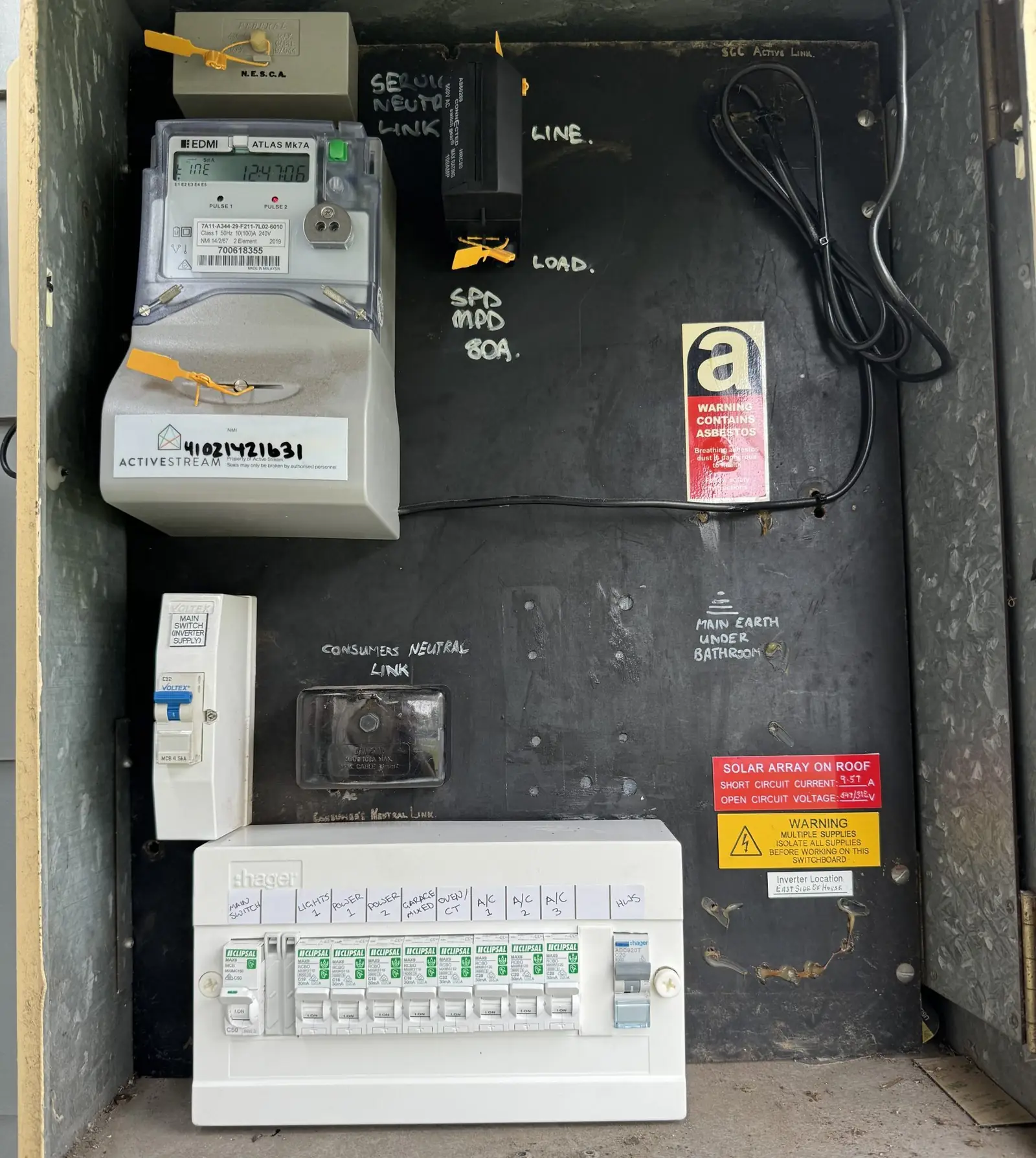
- The switchboard
A power point or power board
The most common source. A loose terminal behind the plate, a worn socket or too much on one power board heats the plastic and gives off that fishy smell.
A plug or appliance
Sometimes the heat is in a plug, a charger or the appliance itself. If the smell turns up when it runs and fades when it's off, that's your clue.
A light fitting in the ceiling
Halogen transformers and older light fittings can overheat above the ceiling. The smell drifts down, which makes it hard to place.
An exhaust fan
A bathroom or laundry exhaust fan motor can overheat as it wears. Notice whether the smell comes when the fan is on.
The switchboard
Less common, but a hot connection at the board smells the same. If it's strongest at the board, stay clear of it and call.
Why a power point can smell like fish: more detail on each cause
Some of the hard plastics used in power points, switches, plugs and light fittings give off a fishy smell as they heat up and start to break down. The question is what's heating them.
A loose connection behind the plate Most common
A terminal that has worked loose over the years makes heat right at the join. The plastic around it warms and gives off that fishy smell, often well before you can see any marks.
A worn power point that doesn't grip
Old power points lose their spring. A plug that sits loose touches on a small area and runs hot, especially with a heater or kettle on it.
Too much on one power point
Heaters, kettles, air fryers and dryers draw a lot of power. Run two through a double adaptor or power board and the power point and plugs can overheat without anything tripping.
An overheating plug or appliance
Sometimes the power point is fine and the heat is in a plug, a power board, a charger or the appliance's own wiring. Unplugging it, if it's cool and dry, often tells you quickly.
Light fittings, transformers and fans Older fittings
Halogen downlight transformers, older fluorescent fittings and exhaust fan motors can overheat in the ceiling. The smell drifts down, which makes it hard to place.
Something that isn't electrical Rule out first
Rubbish, drains, a dead animal in the wall or roof, or a spill under the fridge can smell fishy too. If you've found one of those, you probably don't need us.
Signs the fishy smell is electrical
Rule out the bin, the drains and the fridge first. If it's none of those, look for these.
No fish, and it keeps coming back
A fishy smell with no food, bin or pet to explain it, that comes and goes over days or weeks, is a classic sign of plastic overheating somewhere in the house.
Stronger near one power point or switch
Stand near each power point, switch and light in the room. If the smell is stronger at one, that's the likely source. Look and sniff only. Don't take anything apart.
It turns up when something is running
If it appears when the heater, kettle, dryer or a light is on, and fades when it's off, the heat is in that appliance, its plug or the power point it's using.
A warm plate or brown marks
A power point or switch that feels warmer than the wall, or has brown or yellowed patches around the pin holes or screws, is overheating. Stop using it.
Flickering lights or a faint buzz
A light that flickers, or a faint buzz or crackle from a switch or power point, means a connection is arcing. That's often where the smell is coming from.
Coming from the ceiling
Old halogen downlight transformers, light fittings and exhaust fans can overheat too. A smell from above, especially with the light or fan on, points there.
How we find it and fix it
We go looking for heat, not just the smell. It's usually one power point, switch or fitting.
- 1
Ask where and when
Lachie asks where the smell is strongest, when it turns up and what's usually running at the time. That narrows it down to a room, and often to one circuit.
- 2
Check each power point, switch and fitting
We check each one in the area for heat and discolouring, then isolate the circuit and take the plate off the likely culprit. You see what we see: a blackened terminal, a loose screw or brittle plastic.
- 3
Test the circuit
A loose joint at one power point often has a neighbour. We check the other power points and switches on that circuit and test the cable, so the whole problem is fixed in one visit.
- 4
Replace it and test it
We replace the damaged power point, switch or fitting, test it under load and show you the old one. You get the price before any work starts, and a Certificate of Compliance for Electrical Work (CCEW) where the work needs one.
Replace one part, repair the circuit, or check the whole house: your options side by side
Once we have found the source, the fix depends on how far the heat has spread and how old the rest of the wiring is.
If you're running heaters and appliances on power boards because you're short of power points, a few extra power points fix the cause. We'll tell you what we see and price it first.
What you can safely do now
A fishy smell isn't usually an emergency yet. It's a warning, so act on it today.
Safe to do now
- If you can tell which power point or switch it is, stop using it and switch that circuit off at the switchboard, if the board is dry and safe to reach.
- Unplug anything plugged into it, but only if the plug is cool, dry and undamaged.
- If you can't find it, turn off heaters and heavy appliances and note which room the smell is strongest in.
- Stick a note on the power point so nobody uses it.
- Take a photo of any marks, and of your switchboard.
- Call Lachie on 0402 079 953.
Don't
- Don't take the cover off a power point, switch or light to look behind it.
- Don't keep using a power point that's warm, discoloured or smells.
- Don't ignore it because the smell comes and goes. The heat damage builds each time.
- Don't touch anything that's hot, wet or scorched.
Call straight away if
- The smell turns to burning, or you see smoke. Get everyone out and call 000. Never put water on an electrical fire.
- A power point, switch or light is hot, scorched, crackling or buzzing.
- Lights are flickering or the power keeps tripping as well.
- The smell is at the switchboard or meter box. Stay clear of it.
Questions people ask
Why does my house smell like fish?
If there's no fish, bin or drain to blame, it's often electrical. Some plastics in power points, switches, plugs and light fittings give off a fishy smell as they overheat. Have it checked before it gets worse.
Can a power point smell like fish?
Yes. When a loose connection or too much load heats a power point, its plastic can smell fishy before you see any marks. Stop using it, switch that circuit off if it's safe, and call.
Is a fishy electrical smell dangerous?
It can be. It means plastic is overheating, and the next stages are scorching, melting and possibly fire. It's rarely an emergency at the fishy stage, which is exactly why it's the best time to fix it.
Why can't I find where the fishy smell is coming from?
Because the heat is often behind a plate, inside a light fitting or in the ceiling, and the smell drifts. It may only appear when one appliance is running. We check each fitting for heat and test the circuit.
Can I replace the power point myself?
No. In NSW, replacing a power point or switch is electrical work, and it must be done by a licensed electrician. It's also worth checking the cable and the other power points on the circuit, which we do while we're there.
Can you come today?
Often, yes. Lachie works Monday to Friday, 7am to 5pm, and takes urgent calls from 4am to 9:30pm, 7 days. Call 0402 079 953 and tell us where the smell is strongest and when it turns up.

Get a free quote from Lachie
Four quick details and Lachie will be in touch. Your quote is back within 24 hours, with no hidden fees.
- Free quotes. Back to you within 24 hours, in plain English, with no hidden fees.
- Upfront pricing. You know the cost before any work starts.
- 100% satisfaction guarantee. Not happy with the work? Lachie comes back and makes it right, free.
- Quality guarantee. Every job done to the Australian wiring rules (AS/NZS 3000), with parts that meet Australian standards, and tested before we leave.
Rather talk it through? Call Lachie on 0402 079 953