
Urgent? Call Lachie now
Power point melted or scorched? Stop using it, we'll replace it and check the circuit
A melted power point has overheated badly, and it's a fire risk. Switch that circuit off if safe, leave the plug in, and call. Smoke: 000, never water.
5.0 from 24 Google reviewsUpfront pricesLicensed & insured
Offers on this job
- $0Call-out feeOn booked jobs, Monday to Friday, 7am to 5pm.
- $60 offYour first jobNew customers save on their first booked job.
The $0 call-out is for booked jobs: a time we have set together, with the work going ahead. It applies Monday to Friday, 7am to 5pm. After-hours emergency call-outs have a minimum charge of $349 + GST, and Lachie confirms it on the phone before he drives out.
How a power point gets hot enough to melt
Melting takes a lot of heat, and that heat builds at one spot: a poor connection, an overloaded socket or a damaged plug. This is where it usually starts.
- A loose connection behind the plate
- Too much on one power point
- A worn socket that doesn't grip
- A damaged cord or plug
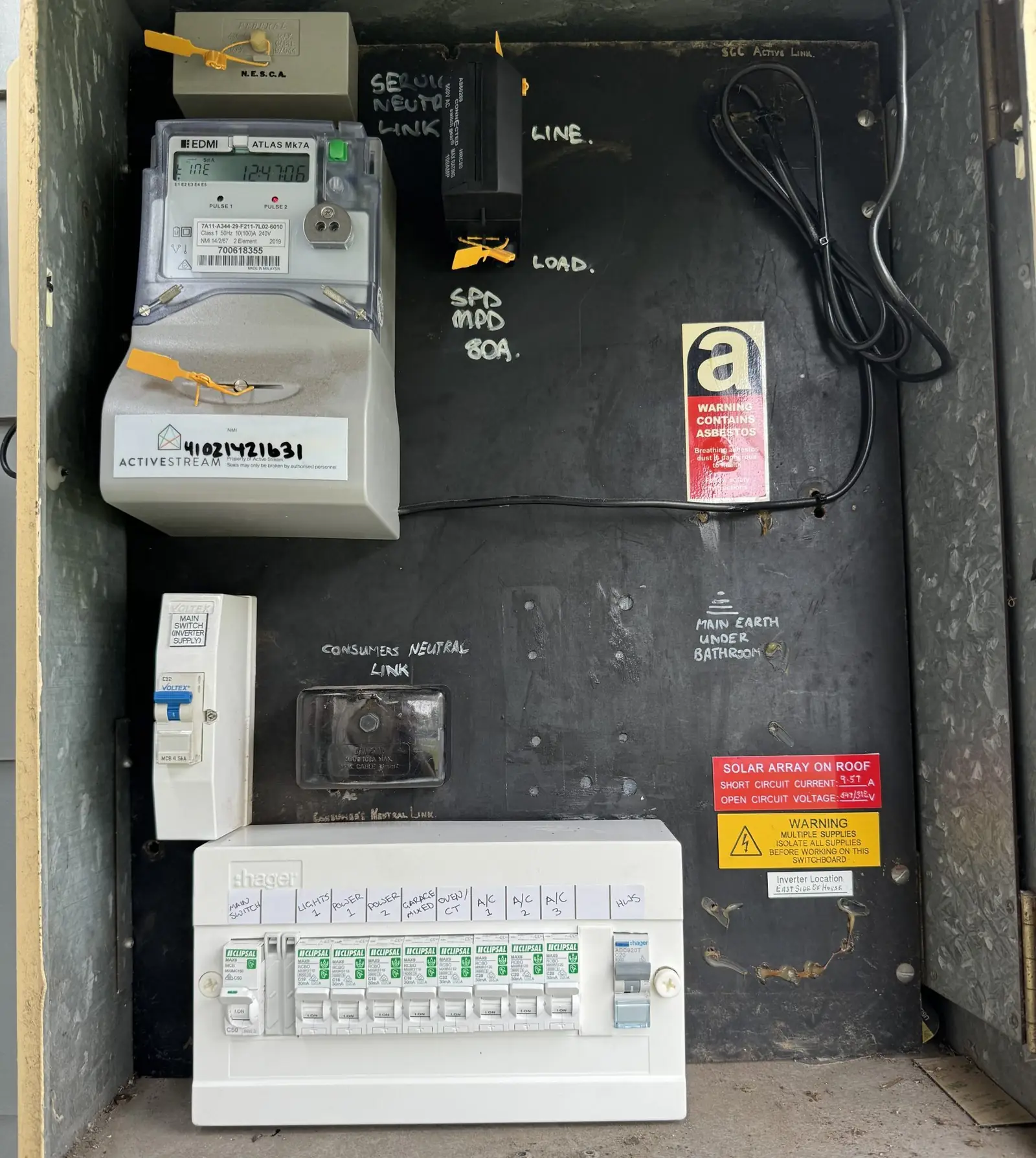
- The switchboard: where you switch it off
A loose connection behind the plate
The most common cause. A loose wire heats the terminal until the plastic around it browns, softens and melts, often from the back first.
Too much on one power point
A heater, kettle or air fryer on a double adaptor or power board pulls a heavy load for a long time. The power point and plugs cook slowly until they soften.
A worn socket that doesn't grip
A plug that sits loose touches on a small area, which runs hot. Melted pins and a blackened plug face usually start here.
A damaged cord or plug
A crushed cord, or a bent or burnt pin, can overheat right at the plug. Don't plug that appliance in anywhere else until it has been checked.
The switchboard: where you switch it off
Switch the circuit off at the switchboard, or use the main switch, if the board is dry and safe to reach. Leave the melted power point and plug exactly as they are.
What usually melts a power point: more detail on each cause
Plastic melts when one spot runs hot for a long time. These are the usual reasons.
A loose connection behind the plate Most common
Terminals loosen over years of heating and cooling. The poor joint heats up under every load, and the plastic around it browns, then softens, often at the back where you cannot see it.
A heavy load on one power point
Heaters, kettles, air fryers and dryers can draw close to the 10 amps a standard power point is rated for. Two through a double adaptor, or one running for hours, can overheat it without tripping anything.
Water in an outdoor power point Outdoors
Rain, sprinklers and pool splash get into outdoor power points, especially with the cover left open or cracked. Moisture and dirt let current track across the socket, which blackens and burns it.
Heat damage in the cable Often missed
When a power point melts, the cable behind it often gets cooked too. Its insulation goes brittle and can fail later. That's why we check the circuit, not just the power point.
What you might be seeing
Melting and scorching are damage that has already happened. Any of these means stop using that power point.
A melted or misshapen plug
Soft, bubbled or warped plastic on the plug face, or pins stuck in the socket, means heat built up right where the plug meets the power point.
Brown or black marks on the plate
Scorching around one or both pin holes, or a brown haze across the plate, shows arcing and heat behind the surface.
An outdoor power point gone black
Black inside the cover, on the socket or on the plug is often water and dirt letting current track across the face. It's common on pool, garden and carport power points.
A smell before you saw it
A burning or fishy smell in the days before is common. The power point was overheating well before it showed.
The power point went dead
The heat may have burnt through a connection, so the power point, and anything after it on the circuit, stopped working or tripped.
How we fix it
We make it safe, replace the melted power point, then check the cable and the circuit for heat damage.
- 1
Make it safe
Lachie isolates the circuit at the switchboard, proves it's dead, and removes the melted power point and plug carefully, so nothing is pulled from a live socket.
- 2
Check the cable and terminals
We look at how far the heat has gone. Brittle or browned insulation is cut back to clean copper, or the cable is replaced if the damage runs further.
- 3
Test the circuit
A melted power point means the circuit has been running hot. We test the cable's insulation and check the other power points on the circuit for loose or heat-damaged joints.
- 4
Replace it and sign off
We fit a new power point, a weatherproof one outdoors, test it under load and check the safety switch trips as it should. You get the price before we start, and a Certificate of Compliance for Electrical Work (CCEW) where the work needs one.
Replace it, repair the circuit, or add power points: your options side by side
A melted power point is always replaced. What else is worth doing depends on why it melted.
New or altered circuits need safety switch (RCD) protection under the wiring rules (AS/NZS 3000). If yours has none, we'll tell you and price it first. The choice is yours.
What you can safely do now
A melted power point is a fire risk. Make it safe first, then call.
Safe to do now
- Switch that circuit off at the switchboard. If you're not sure which one, use the main switch. Only do this if the board is dry and safe to reach.
- Leave a melted plug where it is. Unplug only if the plug is cool, dry and undamaged.
- Tape over the power point or stick a note on it so nobody uses it.
- Keep kids and pets away.
- Take photos of the power point and the plug, for us and for your insurer.
- Call Lachie on 0402 079 953.
Don't
- Never put water on an electrical fire or a smoking power point.
- Don't pull out a melted plug, or yank its cord.
- Don't touch a power point that's hot, wet or still smoking.
- Don't take the plate off, or plug the appliance in somewhere else to test it.
- Don't use it again because it still works.
Call straight away if
- There's smoke or flames. Get everyone out, close the doors behind you and call 000.
- You still smell burning after the circuit is off.
- An outdoor power point is black and the safety switch keeps tripping.
- More than one power point is warm, scorched or melted.
Questions people ask
Why did my power point melt?
Usually a loose connection behind the plate, worn contacts that no longer grip the plug, or a heavy appliance running through it for hours. Outdoors, water is a common cause. All of them make heat at one spot until the plastic gives way.
Is a melted power point dangerous?
Yes. It has already been hot enough to melt plastic, and the cable behind it may be damaged too. Switch the circuit off, don't use it, and have it replaced. If there's smoke, call 000.
Why is my outdoor power point black?
Usually moisture and dirt have got inside, often through an open or cracked cover, and current has tracked across the socket. It can also be heat from a loose connection. Either way, it needs replacing with a weatherproof power point.
Can I still use a scorched power point if it works?
No. Scorch marks mean arcing has happened, and the contacts and plastic are damaged. It can fail or overheat without warning. Switch the circuit off and leave it until it's replaced.
Is my appliance damaged too?
It might be. A melted plug or burnt pins means the plug and lead need checking before you use it again. Don't plug it in anywhere else until it has been checked or replaced.
Can you come tonight?
Yes. Lachie takes urgent calls from 4am to 9:30pm, 7 days. Call 0402 079 953, tell us what you can see, and keep that circuit off at the switchboard while you wait. You get the price before any work starts.

Get a free quote from Lachie
Four quick details and Lachie will be in touch. Your quote is back within 24 hours, with no hidden fees.
- Free quotes. Back to you within 24 hours, in plain English, with no hidden fees.
- Upfront pricing. You know the cost before any work starts.
- 100% satisfaction guarantee. Not happy with the work? Lachie comes back and makes it right, free.
- Quality guarantee. Every job done to the Australian wiring rules (AS/NZS 3000), with parts that meet Australian standards, and tested before we leave.
Rather talk it through? Call Lachie on 0402 079 953