
Urgent? Call Lachie now
Power point sparked? Don't use it again, switch it off and we'll replace it
Switch that circuit off at the switchboard if it's dry and safe to reach, and don't use the power point again. Smoke or fire: call 000, never water.
5.0 from 24 Google reviewsUpfront pricesLicensed & insured
Offers on this job
- $0Call-out feeOn booked jobs, Monday to Friday, 7am to 5pm.
- $60 offYour first jobNew customers save on their first booked job.
The $0 call-out is for booked jobs: a time we have set together, with the work going ahead. It applies Monday to Friday, 7am to 5pm. After-hours emergency call-outs have a minimum charge of $349 + GST, and Lachie confirms it on the phone before he drives out.
Where the spark comes from
A spark is electricity jumping a gap: usually at a loose wire, a worn socket or a damaged plug. Every spark leaves heat and damage behind.
- A loose connection behind the plate
- Too much on one power point
- A worn socket that doesn't grip
- A damaged cord or plug
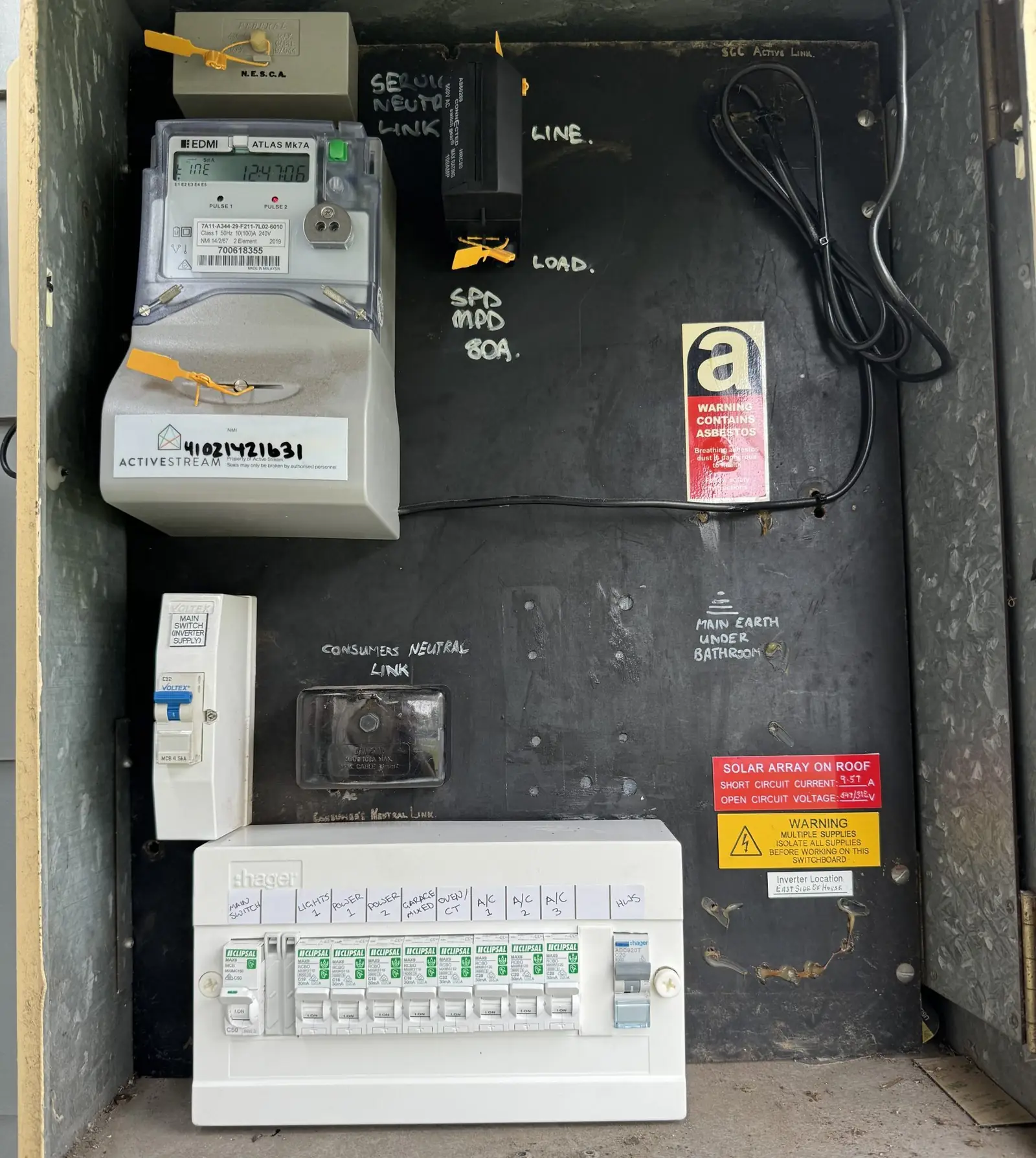
- The switchboard: where you switch it off
A loose connection behind the plate
The most common cause. A wire works loose on its screw and arcs across the gap, which you may see as a flash or hear as a crackle.
Too much on one power point
A heater, kettle or air fryer on a double adaptor or power board pulls a heavy load through one power point. Plugging in or switching on under that load makes a bigger spark.
A worn socket that doesn't grip
Worn contacts touch the plug pins on a small area. Every bump makes and breaks the connection, and that's where sparks and scorch marks come from.
A damaged cord or plug
Bent or burnt pins, a cracked plug or a cord with damaged insulation can spark at the power point. Stop using that appliance until it has been checked.
The switchboard: where you switch it off
Switch that circuit off at the switchboard, or use the main switch, if the board is dry and safe to reach. Then leave the power point alone until it's replaced.
What usually causes a power point to spark: more detail on each cause
These are the gaps we usually find, and why they open up.
A loose wire behind the plate Most common
Terminals loosen over years of heating and cooling. A loose wire arcs every time the load changes, and each arc burns the joint a little more.
A failing switch on the power point
The switch on a power point has small contacts that wear. A spark as you switch it on, or a switch that feels soft or crunchy, means it's failing.
Pulling plugs out while appliances are running
Pulling out a heater or kettle while it's on draws a spark across the pins every time. Over months that pits the contacts and wears the socket faster. Switch off at the power point first.
Water or physical damage Wet areas
Outdoor and laundry power points can spark when moisture gets in. So can a plate cracked by a knock. Both need replacing, not drying out or taping up.
Which kind of spark was it?
Some sparks are a warning and some are damage already done. Here's what each one usually means.
A spark when you switched it on
If the power point flashed or cracked as you flicked its switch, the switch contacts or a terminal behind the plate are failing. Don't use that switch again.
A spark when you plugged in or pulled out
Doing either with the appliance running can make a small flash in the socket. A big flash, a bang, marks on the pins, or a spark with the appliance off means worn or loose contacts.
A bang, then the power went off
A loud crack with a trip at the switchboard is a short circuit: something touched that shouldn't have. Reset it once only. If it trips again, leave it off.
Black or brown marks
Scorching on the plate, around the pin holes or on the plug means arcing has already happened. The plastic and contacts are damaged and won't recover.
Crackling or a burning smell afterwards
If you hear crackling behind the plate or smell hot plastic, the fault is still there. Switch the circuit off now.
How we fix it
We make it safe, find out why it sparked, then replace the power point and check the circuit.
- 1
Make it safe
Lachie isolates the circuit at the switchboard and proves it's dead before the plate comes off. You see what we see: the loose wire, the burnt terminal or the worn contacts.
- 2
Find out why it sparked
We check the terminals, the cable behind the power point and the plug that was in it. We also check the other power points on that circuit, because loose joints often come in pairs.
- 3
Replace it
We fit a new power point. If the cable behind it is burnt, we cut it back to clean copper or run new cable. You get the price before we start.
- 4
Test it and sign off
We test the circuit, its safety switch and the new power point under load, and show you the old one. You get a Certificate of Compliance for Electrical Work (CCEW) where the work needs one.
Replace it, add more, or check the circuit: your options side by side
Replacing the power point fixes the spark. What else is worth doing depends on why it happened.
Replacing a damaged power point doesn't usually need switchboard work. New circuits and extra power points need safety switch (RCD) protection under the wiring rules (AS/NZS 3000). If yours has none, we'll tell you and price it first.
What you can safely do now
A spark means damage. Treat that power point as unsafe until it's replaced.
Safe to do now
- Switch that circuit off at the switchboard. If you can't tell which one it is, use the main switch. Only do this if the board is dry and safe to reach.
- Unplug the appliance only if the plug is cool, dry and undamaged. If it isn't, leave it plugged in with the circuit off.
- Put tape or a note over the power point so nobody uses it.
- Keep kids and pets away from it.
- Take a photo of any marks on the plate or the plug.
- Call Lachie on 0402 079 953.
Don't
- Don't use it again, even if it seems fine now.
- Never put water on an electrical fire or a smoking power point.
- Don't take the plate off or try to tighten anything. In NSW, that's a licensed electrician's job.
- Don't touch the power point or plug if it's hot, wet, scorched or still crackling.
Call straight away if
- There's smoke or flames. Get everyone out, close the doors behind you and call 000.
- You can still hear crackling or smell burning after the circuit is off.
- More than one power point has sparked, or the lights are flickering too.
- The switchboard trips straight back off when you reset it.
Questions people ask
Is it normal for a power point to spark?
A tiny flash inside the socket, when you plug in or pull out something that's switched on, can happen. A big spark, a bang, a flash outside the plate, marks, a smell or crackling is not normal. Switch it off and have it replaced.
Why does my power point spark when I turn it on?
Usually the switch contacts, or a terminal behind the plate, are worn or loose. Each time you switch on under load, the gap arcs. It gets worse with use, so stop using it and have it replaced.
Why did my plug spark when I pulled it out?
Pulling a plug while the appliance is running draws a spark across the pins. If that's all it was, switch off at the power point first next time. If it was big, left marks, or the plug feels loose, the socket needs replacing.
Can a sparking power point cause a fire?
Yes. Each spark is a tiny burst of heat. Repeated arcing at a loose wire or worn socket can char the plastic and the cable behind the plate, and that can start a fire inside the wall.
Can I keep using it if it still works?
No. Working doesn't mean safe. The damage from a spark is behind the plate, and it gets worse each time the power point is used. Switch the circuit off and leave it until it's replaced.
Can you come tonight?
Yes. Lachie takes urgent calls from 4am to 9:30pm, 7 days. Call 0402 079 953, tell us what happened, and keep that circuit off at the switchboard while you wait. You get the price before any work starts.

Get a free quote from Lachie
Four quick details and Lachie will be in touch. Your quote is back within 24 hours, with no hidden fees.
- Free quotes. Back to you within 24 hours, in plain English, with no hidden fees.
- Upfront pricing. You know the cost before any work starts.
- 100% satisfaction guarantee. Not happy with the work? Lachie comes back and makes it right, free.
- Quality guarantee. Every job done to the Australian wiring rules (AS/NZS 3000), with parts that meet Australian standards, and tested before we leave.
Rather talk it through? Call Lachie on 0402 079 953