
Often fixed the same day
Power point stopped working? We'll test it, find out why and replace it
Usually a tripped safety switch, a worn power point or a loose connection along the circuit. Lachie tests it, finds which, and replaces or repairs it.
5.0 from 24 Google reviewsUpfront pricesLicensed & insured
Offers on this job
- $0Call-out feeOn booked jobs, Monday to Friday, 7am to 5pm.
- $60 offYour first jobNew customers save on their first booked job.
The $0 call-out is for booked jobs: a time we have set together, with the work going ahead. It applies Monday to Friday, 7am to 5pm. After-hours emergency call-outs have a minimum charge of $349 + GST, and Lachie confirms it on the phone before he drives out.
Why one power point can stop working
Power points are wired one after another on a circuit from the switchboard. A dead power point is either off at the board, faulty itself, or cut off by a fault further back.
- The tripped safety switch or breaker
- The power circuit
- A loose or worn power point
- The appliance, not the power point
- The lights, still working
The tripped safety switch or breaker
A faulty appliance or water in a power point trips it and cuts every power point on that circuit. Reset it once. If it trips again, leave it off and call.
The power circuit
Power points on one circuit share the same cable from the board, so a fault at one can affect the ones after it, even with nothing tripped.
A loose or worn power point
Connections behind the plate loosen over the years, and contacts wear until plugs feel loose. Scorch marks, a smell or a buzz mean switch that circuit off and call.
The appliance, not the power point
Sometimes the power point is fine and the appliance is not. If a lamp you know works lights up in that power point, the appliance is the problem.
The lights, still working
Lights run on their own circuit, so they usually stay on. That points to the fault being on the power circuit.
What usually causes it: more detail on each cause
A dead power point is usually something tripped, something worn or something loose. Each has a different fix.
A tripped safety switch or breaker Check first
A faulty appliance, or water in a power point, trips the safety switch and cuts every power point on that circuit. Reset it once. If it trips again, something on that circuit has a fault.
A loose or burnt connection Most common
Connections behind the plate loosen over years of heating and cooling. Once one lets go, that power point and any after it on the circuit go dead. A burnt one often leaves brown marks or a smell.
A worn-out power point
Contacts wear with use, the switch on the plate breaks, or a cracked plate lets dust and moisture in. A power point that grips loosely, or only works when you wiggle the plug, needs replacing.
A faulty appliance
Sometimes the power point is fine and the dishwasher, washing machine or kettle is not. If a lamp you know works lights up in that power point, the appliance is the problem.
Water near the power point
Under-sink, laundry and outdoor power points sit near water. A leaking tap, hose or pipe can get into them, trip the safety switch and corrode the contacts.
A damaged cable in the wall Less common
A nail or screw through a cable during a renovation, or rodents in the roof, can damage the cable feeding a power point. We find it by testing, not by pulling the wall apart.
What the power point is doing tells us where to look
Check a few things before you call. They tell us whether it's the power point, the appliance or the circuit.
One power point dead, the others fine
The fault is usually in that power point: worn contacts, a loose connection or heat damage behind the plate.
Several power points dead together
Power points on one circuit are wired one after another. A loose connection at one can kill every one after it, even with nothing tripped.
It trips the safety switch when you plug in
If it trips only with one appliance, that appliance is likely faulty. If it trips with anything, or with nothing plugged in, the power point or the circuit has the fault.
The dishwasher or washing machine has no power
Their power points sit under the sink or behind the machine, near water. A slow leak there can trip the safety switch or corrode the power point.
Plugs feel loose or fall out
The contacts inside have worn and no longer grip. A loose contact makes heat, so stop using it.
Scorch marks, a burning smell or a buzz
That's heat at a connection. Switch that circuit off at the switchboard if it's safe to reach, and don't use the power point.
How we fix it
We test the power point, the appliance and the circuit, so you only pay to fix what's actually faulty.
- 1
Talk it through
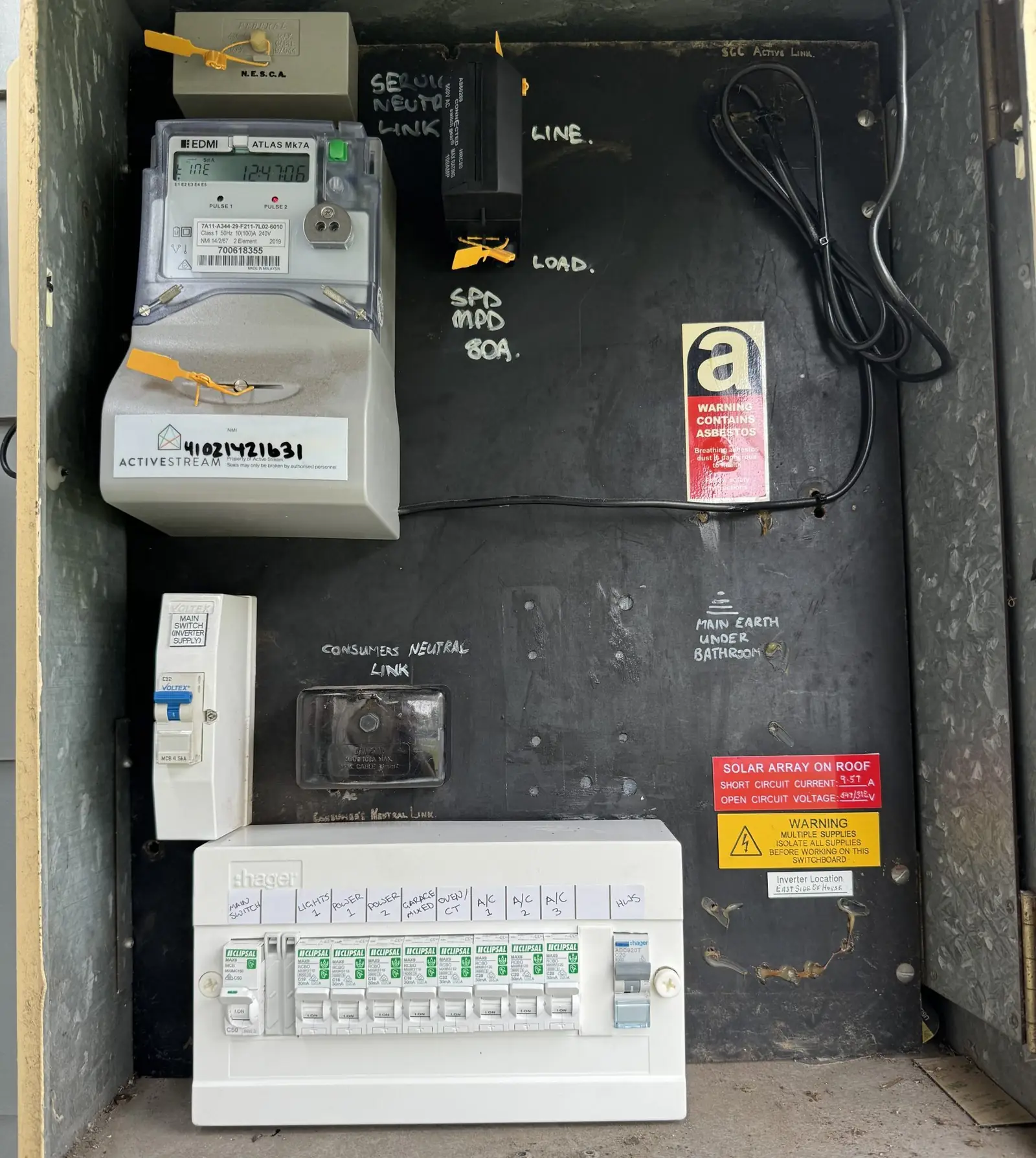
Lachie asks which power points are dead, whether anything tripped, and what was plugged in. A photo of the switchboard and the power point helps.
- 2
Test the circuit and the safety switch
At the switchboard, we check the circuit and test its wiring for current leaking to earth. That shows whether the fault is in the circuit or in what's plugged in.
- 3
Check the power point and those around it
With the circuit isolated, we take the plate off and check the terminals, the contacts and the cable. If several are dead, we check each one along the circuit until we find the loose or burnt one.
- 4
Replace it, test it, show you
We replace the power point or remake the connection, test the circuit and its safety switch, and show you what we found. You get the price before any work starts, and a Certificate of Compliance for Electrical Work (CCEW) where the work needs one.
Replace it, add more, or give an appliance its own circuit: your options side by side
Once it's working, the right fix depends on why it failed.
If the appliance is faulty, we tell you, and it's one for the manufacturer or an appliance repairer. Don't keep using an appliance that trips the safety switch, even on another power point.
What you can safely do now
These steps are safe for anyone. Anything behind the plate or inside the switchboard is a licensed electrician's job.
Safe to do now
- Check the switch on the power point itself is on.
- Unplug everything on that circuit, if it's dry and safe to touch, then reset the safety switch or breaker once. If it trips again with nothing plugged in, leave it off.
- Plug a lamp or phone charger you know works into the power point, if the power point is dry and undamaged. If that works, the appliance is the problem.
- Keep kids and pets away from a power point that is wet, damaged or scorched.
- Take a photo of the switchboard and the power point.
Don't
- Don't touch a power point that's wet, cracked, scorched or warm, or an appliance sitting in water.
- Don't take the plate off, or try to repair or replace a power point yourself. In NSW that's a licensed electrician's job.
- Don't run the dishwasher or washing machine on an extension lead from another room.
- Don't keep resetting a safety switch that trips straight back off.
Call straight away if
- The power point is scorched, melted, buzzing, sparking or smells of burning. Switch that circuit off at the switchboard if it is safe.
- The safety switch trips straight back off, even with nothing plugged in.
- There is water under the sink, in the laundry or near the power point, and the power has tripped. Keep clear of the water.
- You get a tingle from a tap or the shower. Keep everyone away and call Ausgrid on 13 13 88 first.
- There is smoke or fire. Get everyone out and call 000. Never put water on an electrical fire.
Questions people ask
Why has my power point stopped working?
Usually a safety switch or breaker has tripped, a connection behind the plate has worked loose, or the power point has worn out. Check the switchboard and reset once. If it's still dead, it needs testing.
Why is my power point tripping the safety switch?
If it trips only with one appliance, that appliance is probably leaking current to earth. If it trips with anything plugged in, or nothing, the fault is in the power point or the circuit, often from water. Leave it off and call.
Why is there no power to my dishwasher or washing machine?
Check the switch on its power point and the switchboard. These power points sit near water, so a leak can trip the safety switch or corrode the contacts. If a lamp works in that power point, the appliance is likely faulty.
Why are several power points not working when nothing's tripped?
Power points are wired one after another, so a loose or burnt connection at one cuts power to the rest further along. It needs finding, because a loose connection gets hot. We test along the circuit to find it.
Can I replace a power point myself?
No. In NSW, replacing a power point is electrical wiring work, and only a licensed electrician can do it. It's a quick job for us, and we test the circuit and the safety switch at the same time.
Can you come today?
Often, yes. Lachie works Monday to Friday, 7am to 5pm, and takes urgent calls from 4am to 9:30pm, 7 days. Call 0402 079 953, tell him which power points are dead and whether anything tripped, and you get the price before any work starts.

Get a free quote from Lachie
Four quick details and Lachie will be in touch. Your quote is back within 24 hours, with no hidden fees.
- Free quotes. Back to you within 24 hours, in plain English, with no hidden fees.
- Upfront pricing. You know the cost before any work starts.
- 100% satisfaction guarantee. Not happy with the work? Lachie comes back and makes it right, free.
- Quality guarantee. Every job done to the Australian wiring rules (AS/NZS 3000), with parts that meet Australian standards, and tested before we leave.
Rather talk it through? Call Lachie on 0402 079 953