
Often fixed the same day
Fuse keeps blowing? Old fuses can't protect you like safety switches do, we'll fix it and show you the options
A fuse blows when a circuit is overloaded or has a fault. We find which, fix it, and explain why old fuses don't protect people from shocks.
5.0 from 24 Google reviewsUpfront pricesLicensed & insured
Offers on this job
- $0Call-out feeOn booked jobs, Monday to Friday, 7am to 5pm.
- $200 offSwitchboard upgradeOld fuses or no safety switches? Save on a new switchboard.
- $60 offYour first jobNew customers save on their first booked job.
The $0 call-out is for booked jobs: a time we have set together, with the work going ahead. It applies Monday to Friday, 7am to 5pm. After-hours emergency call-outs have a minimum charge of $349 + GST, and Lachie confirms it on the phone before he drives out.
What an old fuse board can and can't do
Why the fuse blows, and why the board itself is part of the story.
- Ceramic (rewireable) fuses
- No safety switches
- An old backing board
- No room for anything new
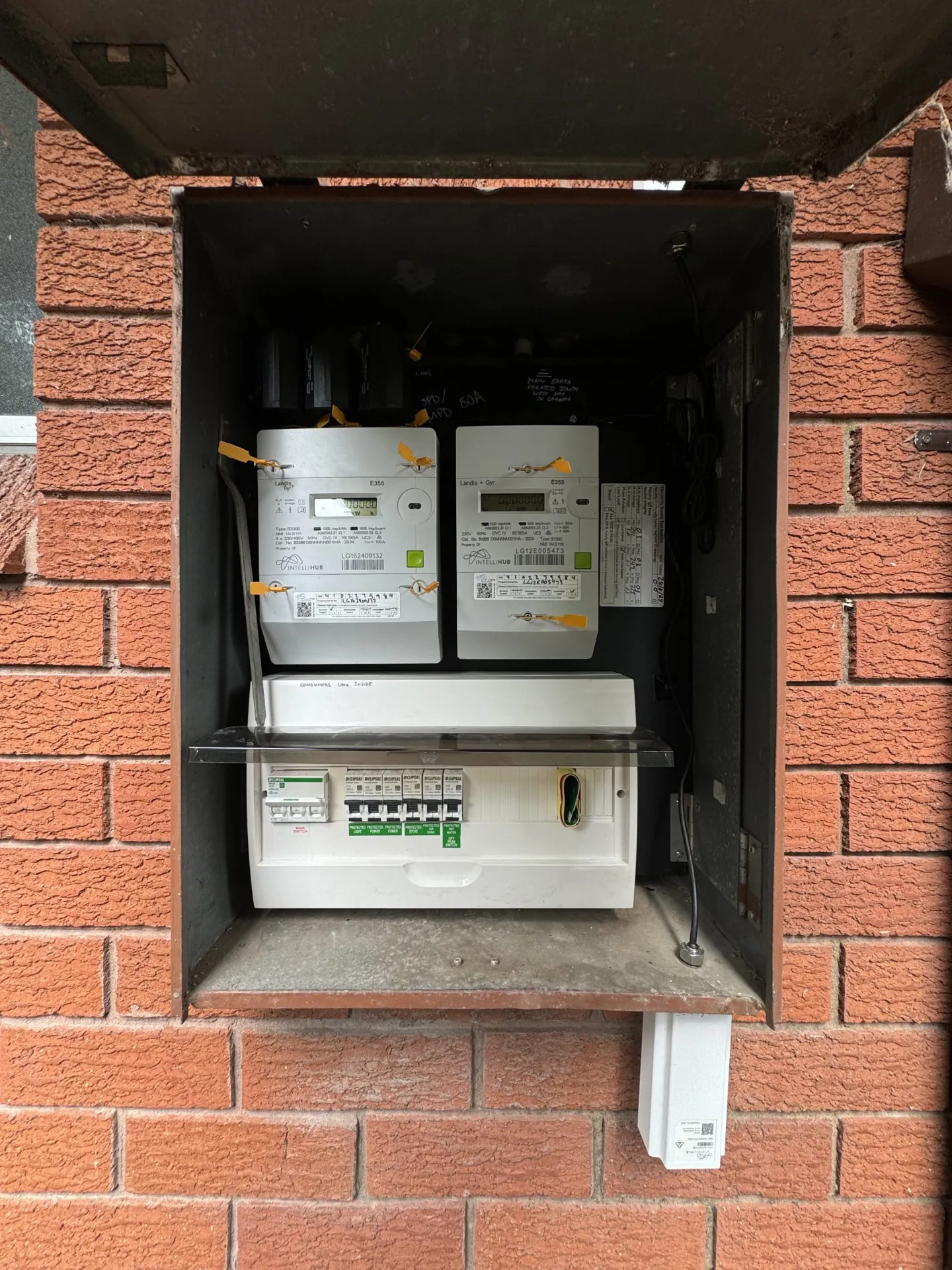
- The new board
Ceramic (rewireable) fuses
Each circuit has a ceramic fuse with a thin wire inside. Too much current melts the wire and the circuit goes off. That's the fuse that keeps blowing.
No safety switches
Fuses protect the wiring from overload. They don't sense current leaking through a person. A safety switch (RCD) does, and cuts the power in a fraction of a second.
An old backing board
Many fuse boards sit on old fibrous panels, and some contain asbestos. Nothing should be drilled or cut into it until it has been checked.
No room for anything new
Old boards have few circuits, so the kitchen, heaters and laundry often share one. That's why fuses blow, and there's nowhere to add a circuit to split the load.
The new board
Circuit breakers you reset with a flick, safety switches on every circuit, and room to give heavy appliances their own circuit.
What usually causes it: more detail on each cause
A fuse that blows is doing its job. The question is what it's protecting the wiring from.
Too much on one circuit Most common
Older homes were wired with few circuits, often one for most of the power points. Heaters, kettles and air fryers can overload it.
A faulty appliance
Worn elements and motors in heaters, kettles, fridges and washing machines can short or draw too much. If it blows every time one thing starts, that's the suspect.
Damaged or ageing wiring Older homes
Old rubber-insulated cable goes brittle, and rats, possums and old renovations damage cables in roofs and walls. A short anywhere on the circuit blows the fuse.
The wrong or tired fuse wire
Many fuses have been rewired over the years with whatever was handy. Too thin blows for no reason. Too thick never blows, and lets the wiring overheat.
Worn fuse holders Older boards
Ceramic holders crack, and their contacts loosen and corrode. A poor contact runs hot and can blow the fuse or scorch the board.
When it blows tells us where to look
Note what was on when it went. If your board has switches, not fuses, it's a circuit breaker tripping instead.
It blows when one appliance goes on
The heater, kettle, microwave or washing machine starts and the circuit dies. That appliance is faulty, or one too many for the circuit.
It blows when several things run at once
Kettle, toaster and microwave together in the morning, or two heaters on a cold night. That's an overload: too much on one circuit.
It blows with almost nothing on
That points to a short: a damaged cable, a faulty fitting or an appliance with an internal fault. Leave it off.
It blows when it rains
Water in an outdoor light, power point or roof fitting can short the circuit. With no safety switch, smaller leaks give no warning at all.
It went with a bang or a smell
A pop, a flash at the board or a smell of hot plastic means a fault, not just a busy circuit. Keep clear and call.
How we fix it
We find the cause first, then make the circuit safe. The board comes into it only if it's part of the problem.
- 1
Talk it through
Lachie asks which rooms went off, what was running and whether it was raining. A photo of your fuse board helps. If anything sounds dangerous, he'll tell you what to switch off.
- 2
Test the circuit
At the board, he isolates the circuit and tests its wiring with an insulation resistance tester, then checks the fuse, the fuse wire and the holder.
- 3
Find the appliance, fitting or overload
He tests appliances on that circuit one at a time, checks suspect fittings, and works out how much the circuit is being asked to carry.
- 4
Fix it and show you the options
We repair or replace the faulty part, fit the right fuse wire or holder if the board is staying, and show you what we found. Then we explain your board options, with a price for each. You decide. You get a CCEW where the work needs one.
Fix the fault, add a circuit, or upgrade the board: your options side by side
You don't have to upgrade to get the power back on. You get the price for each option before any work starts.
A fuse protects the wiring. A safety switch protects people. Old fuse boards usually have none, and that's the honest reason we talk about upgrades. Not every fuse board has to go today.
What you can safely do now
These are safe for anyone. Anything inside the fuse board is a licensed electrician's job.
Safe to do now
- Unplug or switch off what was running on that circuit, if it's dry and safe to touch.
- Note which rooms, lights and power points went off, and what was on at the time.
- Take a photo of the fuse board with the door open, without touching anything inside.
- Keep the fridge and freezer closed if they're on the circuit that's off.
- Call Lachie on 0402 079 953.
Don't
- Don't rewire a fuse, or put thicker wire, a nail, foil or anything else in a fuse holder. It stops the fuse protecting the wiring.
- Don't swap fuse carriers between circuits to get the power back.
- Don't touch the board if it's wet, scorched, buzzing or smells hot.
- Don't drill or screw into the backing board. Older ones may contain asbestos.
Call straight away if
- There's a burning smell, buzzing or scorch marks at the board. Switch off the main switch if it's dry and safe to reach, then call. Smoke or fire: call 000, never water.
- You feel a tingle or shock from a tap or the shower. Call Ausgrid on 13 13 88 first, then us.
- The fuse that has gone runs the fridge, medical equipment or a whole side of the house.
- Someone has been rewiring the fuse to keep it going.
Questions people ask
Why does my fuse keep blowing?
Usually too much on one circuit, a faulty appliance, or a short in the wiring. Old fuse wire and worn holders make it worse. Testing the circuit tells us which it is.
Can I replace the fuse wire myself?
We don't recommend it. Fuse wire is often replaced with the wrong size, which either blows for no reason or stops protecting the wiring. And if there's a fault, new wire just puts power back onto it. Leave it off and call.
Is a blown fuse dangerous?
The blown fuse has done its job. The danger is the cause, if it's still there, and an old board that won't protect anyone from a shock. If there's a burning smell or scorch marks, switch off the main switch if it's safe and call.
What's the difference between a fuse and a safety switch?
A fuse melts when too much current flows, protecting the wiring. A safety switch (RCD) senses current leaking to earth, such as through a person, and cuts the power in a fraction of a second. Old fuse boards rarely have one.
Do I have to upgrade my fuse box?
Not to fix a blown fuse. We can fix the fault and leave the board. But old fuse boards give no shock protection and no room for new circuits, so we'll show you the options and the price for each. The choice is yours.
Can you come today?
Often, yes. Lachie works Monday to Friday, 7am to 5pm, and takes urgent calls from 4am to 9:30pm, 7 days. Call 0402 079 953 for a time.

Get a free quote from Lachie
Four quick details and Lachie will be in touch. Your quote is back within 24 hours, with no hidden fees.
- Free quotes. Back to you within 24 hours, in plain English, with no hidden fees.
- Upfront pricing. You know the cost before any work starts.
- 100% satisfaction guarantee. Not happy with the work? Lachie comes back and makes it right, free.
- Quality guarantee. Every job done to the Australian wiring rules (AS/NZS 3000), with parts that meet Australian standards, and tested before we leave.
Rather talk it through? Call Lachie on 0402 079 953